Barcode Types Explained: EAN-13, UPC-A, Code 128, Code 39 and More
Not every barcode is the same. Each type stores different characters, has a different length and suits a different job. Use this guide to pick the right one.
The most common barcode types at a glance
| Barcode | What it stores | Length | Typical use |
|---|---|---|---|
| EAN-13 | Digits only | 13 digits | Retail products worldwide |
| UPC-A | Digits only | 12 digits | Retail products in the USA and Canada |
| EAN-8 | Digits only | 8 digits | Small packages with little space |
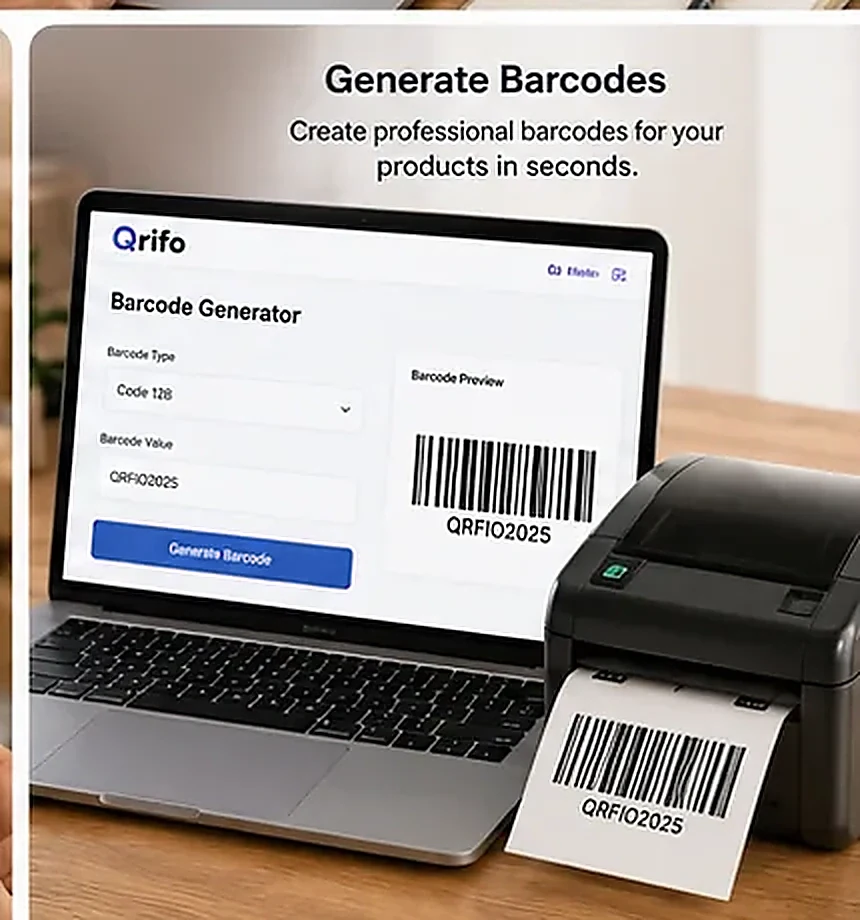
| Code 128 | Letters, digits and symbols | Any length | Shipping, inventory and internal tracking |
| Code 39 | Capital letters, digits and a few symbols | Any length | Industrial labels and ID cards |
| ITF-14 | Digits only | 14 digits | Cartons and shipping boxes |
EAN-13 and UPC-A: retail barcodes
EAN-13 is the standard retail barcode almost everywhere in the world. UPC-A is its 12-digit cousin that is common in the United States and Canada. Both store digits only, and both end with a check digit.
Shops expect these codes to come from the official numbering system. Read Product barcodes explained before you print codes for retail sale.
Code 128: the flexible choice
Code 128 can store letters, digits and symbols, so it suits order numbers, serial numbers and warehouse locations. It packs data tightly, which keeps labels small. Choose it when you need an internal code that doesn’t have to match a retail standard.
Code 39 and ITF-14
Code 39 is older and simpler. It stores capital letters and digits and is easy for basic scanners to read, but it makes wide labels. ITF-14 encodes 14 digits and is printed on outer cartons that hold several retail items.
How to calculate an EAN-13 check digit
The last digit of an EAN-13 barcode is a check digit. It helps a scanner spot a misread. Here is how it works, using the first 12 digits 590123412345:
- Starting from the left, multiply the digits by 1, 3, 1, 3 and so on.
- Add the results: 5 + 27 + 0 + 3 + 2 + 9 + 4 + 3 + 2 + 9 + 4 + 15 = 83.
- Round 83 up to the next multiple of 10, which is 90.
- The check digit is 90 − 83 = 7, so the full code is
5901234123457.
UPC-A uses the same idea with 11 digits and a different weight order (3, 1, 3, 1 …). The Qrifo barcode generator shows what each format accepts.
Which barcode should you choose?
- Selling in shops: EAN-13 or UPC-A, with numbers from the official system.
- Tracking your own stock: Code 128.
- Shipping cartons: ITF-14.
- Need more data, or a link? Use a QR code. See QR code vs barcode.
Barcode printing tips
- Print dark bars on a light background with a blank margin on both sides.
- Don’t stretch the barcode. Resize it in proportion.
- Keep the printed size close to the recommended size for the format.
- Scan every label type before you print a full batch. The Qrifo scanner can read common formats.
Frequently asked questions
What is the most common barcode type?
EAN-13 and UPC-A are the most common on retail products. Code 128 is the most common for shipping and inventory.
Can I make my own EAN-13 barcode?
You can draw any valid 13-digit EAN-13 pattern, but shops expect numbers issued through the official numbering system. Don’t invent product numbers for retail sale.
What is the difference between EAN-13 and UPC-A?
EAN-13 has 13 digits and is used worldwide. UPC-A has 12 digits and is mainly used in the USA and Canada.
Which barcode holds letters?
Code 128 and Code 39 can store letters. EAN-13, UPC-A and ITF-14 store digits only.
Try the free tools: barcode generator · QR and barcode scanner · QR code generator.
Related guides
More tools: URL QR WiFi QR WhatsApp QR vCard QR Barcode generator